
.jpg.webp)
Messi & Argentina: How he built a belated, beautiful bond
There is a sense that we are awaiting the inevitable after Argentina were downed by Spain in the 2026 World Cup final. The tears rolling down Lionel Messi's face after the full-time whistle in New Jersey suggested he may well be about to call time on his glittering international career, having powered his country through the tournament in North America at the age of 39.
For once, Messi was peripheral, with his team-mates adopting an uber-physical approach in a failed attempt to rattle La Roja, rather than trying to play to his strengths. Given the defeat, and the nature of it, this would undoubtedly be a sad end to an incredibly special symbiosis between player and country, but in the wider context of what Messi has achieved across two decades in the Albiceleste shirt, that sadness will soon be forgotten.
The veteran's international career is a testament to perseverance - something Lionel Scaloni's squad has embodied during his eight years at the helm. Messi almost ended his time as an Argentina player a decade ago, but instead he would go from that significant low to lifting all three of the major honours he claimed for his country after the age of 34.
Defeat in Sunday's final hurt him a lot, as Messi described the pain caused by the result as "immense, and it will take time for this wound to heal", but whatever he decides to do next, he can take solace in the fact his legacy has been secure for some time. He said it best himself in the build-up to the tournament: "I already completed the game at the last World Cup in Qatar."
Tumultuous career
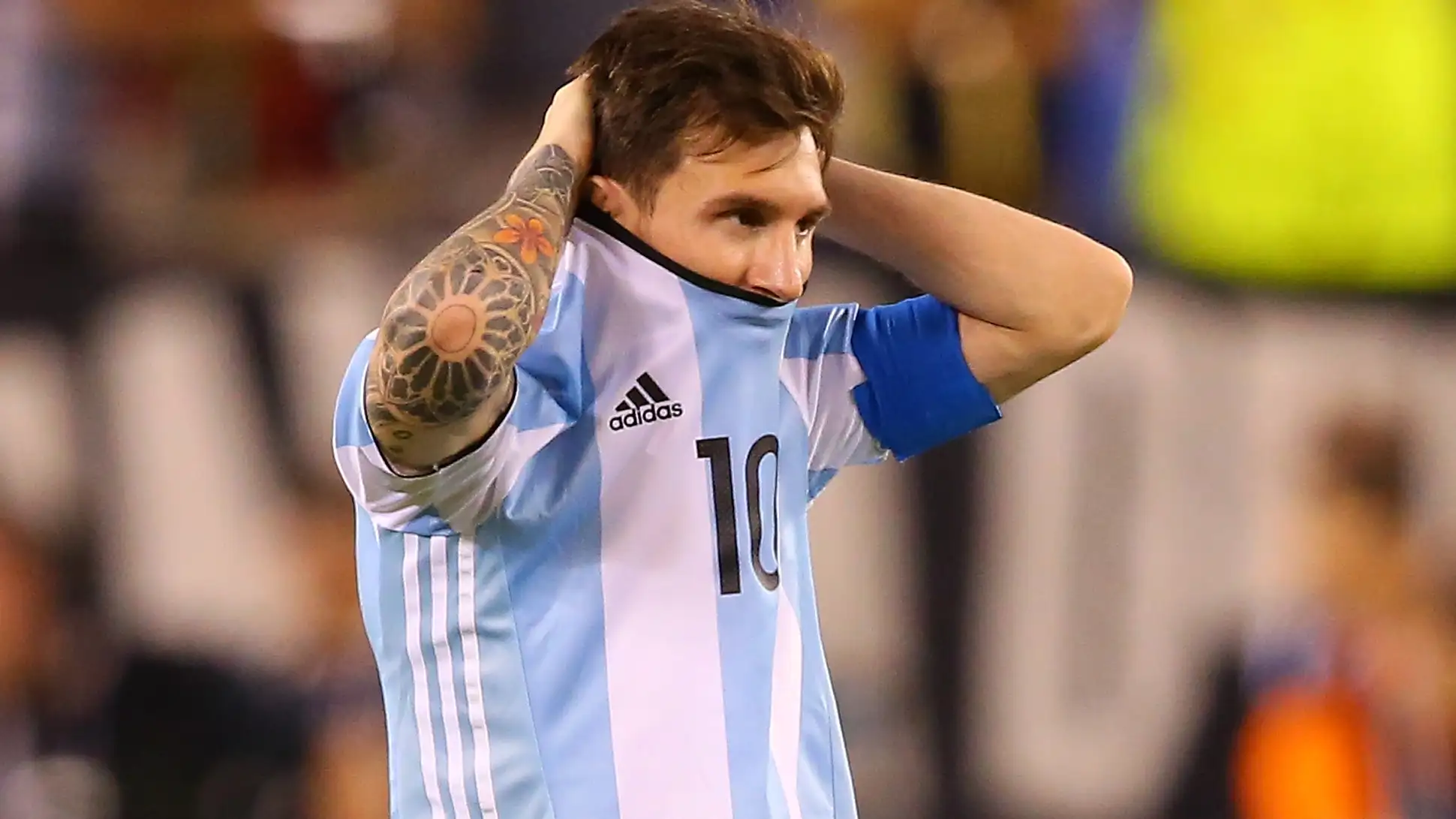
It's always worth remembering that things could have panned out very differently for Messi, and indeed the rest of the football world; in an alternate timeline, his international career ended a decade ago.
Argentina were determined to make the ex-Barcelona attacker the focal point of the team after he emerged as a genuine superstar in the late noughties, but he was initially unable to deliver on the biggest stage. Messi would fail to find the back of the net at both the 2010 World Cup in South Africa or the 2011 Copa America, as the Albiceleste disappointingly bowed out in the quarter-finals on both occasions.
That foreshadowed the darkest period in La Pulga's international career, as he would go on to fall agonisingly short in three consecutive finals after taking the captaincy at the age of 24 - a losing streak that would prompt him to announce his international retirement.
First came the extra-time defeat to Germany in the 2014 World Cup final, followed by the shock loss to Chile in the showpiece of the 2015 Copa America. More heartbreak at the hands of the same opponent on the same stage the following year seemingly pushed Messi over the edge.
However, Messi's international retirement in 2016 would last less than two months, as he dramatically U-turned on the decision, saying at the time: "We need to fix many things in Argentinian football, but I prefer to do this from inside and not criticise from outside."
He helped to guide his country to the 2018 World Cup, and while more heartache would await there, Scaloni's appointment - initially as caretaker - in the wake of the last-16 exit would prove to be seismic.
Unbreakable bond
Indeed, Messi's change of heart and the arrival of Scaloni in the dugout are undoubtedly two of the most significant moments in Argentina's modern footballing history.
It would be a slow burn, with the manager a deeply unpopular appointment in some quarters while coming under intense scrutiny following the failure to claim the 2019 Copa America, but over the course of the ensuing few years, Scaloni would turn the tide of opinion and transform an underachieving side into an unstoppable force that was greater than the sum of its parts, in large part due to the huge bonus of having Messi in attack.
Scaloni's own words pretty much sum up his successful approach: "Football is about heart, gut instinct and never giving up."
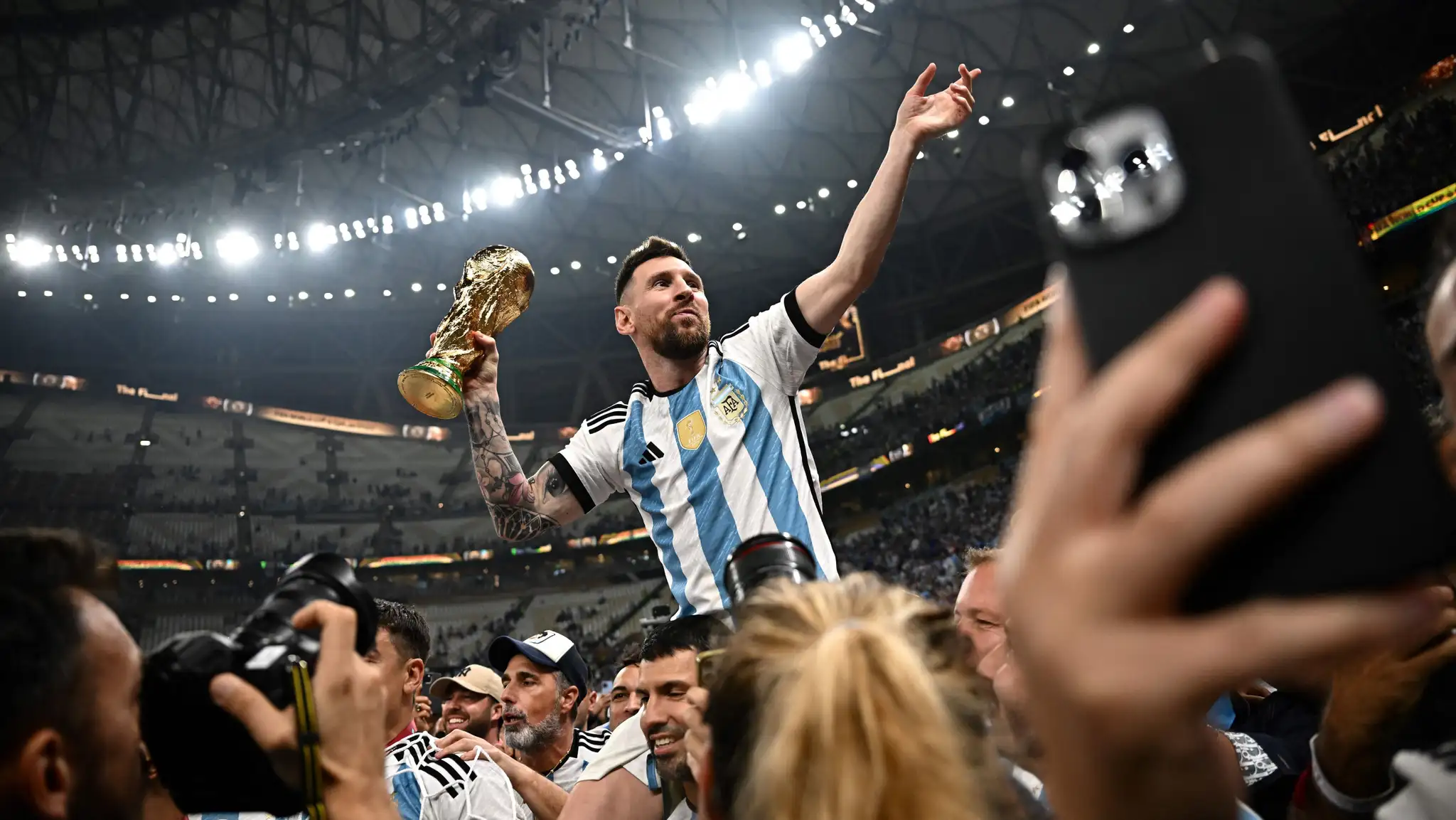
A 36-game winning streak would incorporate the end of Argentina's 28-year wait for a major trophy at the 2021 Copa America, as Scaloni's men defeated fierce rivals Brazil in the final. Messi, of course, was at his best, hauling his country to victory by playing a part in 75 percent of their goals at the tournament, aged 34.
Messi and Argentina carried that momentum into the 2022 World Cup in Qatar, famously prevailing over France on penalties to lift the trophy for the first time in 36 years, despite an inauspicious start to their quest for glory where they were beaten by Saudi Arabia. La Pulga was inevitably instrumental in their success, racking up 10 goal involvements and netting twice in the final to crystallise his status as the greatest footballer of all time.
This was one hell of a redemption arc, as Messi went from retirement to world champion and 'completing football' in the space of six years. That remarkable turnaround solidified what had become an unbreakable bond with the national team and their fans around the world.

Beginning of the end
However, although Argentina would continue their trophy-winning streak by retaining the Copa America in 2024, there was always a sense that they might struggle to defend their World Cup crown because the squad had not really evolved over the last three-and-a-half years, with many ageing members of the 2022 group still knocking about, and pre-tournament performances had not been particularly promising.
Messi also repeatedly threw his involvement in the 2026 edition into doubt amid concerns over his own physical durability in the face of the demands of a title defence across the vast expanse of three North American countries. As recently as March, Scaloni had admitted that the Inter Miami star was still undecided on his participation after a series of niggling injuries in recent years.
Of course, the iconic forward was ultimately included in the Argentine squad for the tournament, giving it his absolute all for his country for what is almost certain to be the final time on an unlikely run to yet another final, scoring eight times and laying on four more as he played his part in an all-timer of a Golden Boot race.
Messi hauled his side over the line time and time again as the holders repeatedly flirted with a premature exit. In the final, however, his exploits alone were not enough.